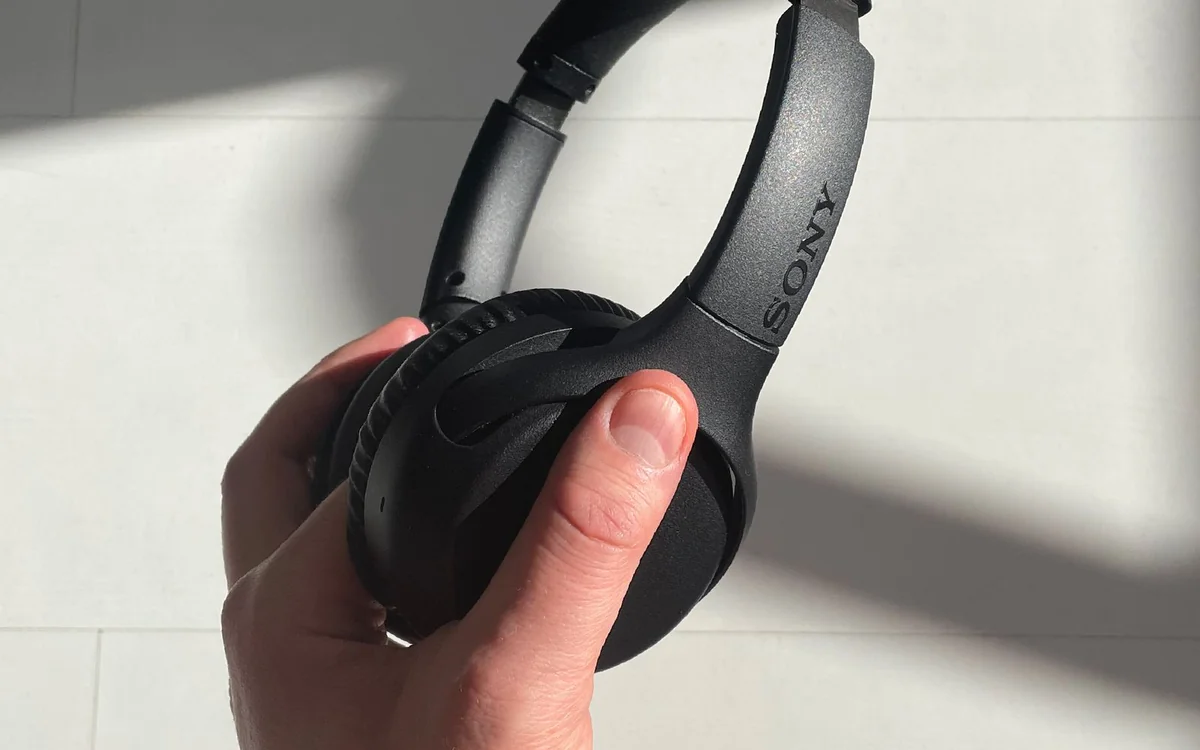
Choose a secure, comfortable fit and easy awareness controls before paying for extra audio modes. Frequent travellers should also check single-ear use and case handling.
The journey is the buying brief
A crowded train, a short walk across a busy junction and a call outside the office ask different things of the same earbuds. Noise isolation is welcome when the carriage rattles, but you still need to hear announcements and conversations. Meanwhile, a loose fit turns every staircase into a worry about losing an earbud. Begin with the route you actually take rather than a specification contest between brands.
This guide is a research-based purchasing framework, not a report of hands-on listening tests. The product examples link to manufacturer information so you can check the exact generation and regional details. Our preference for accessible controls and a manageable case is an editorial judgement about commuting convenience, rather than a measured ranking of sound quality or noise cancellation.
Get the fit right before judging the sound
An earbud that feels comfortable for five minutes in a shop may become distracting halfway through a journey. Look for several supplied tip sizes and check the seller's return rules for opened earphones. Try a different size in each ear if necessary; symmetry of packaging does not mean your ears require identical tips. A secure seal should not require you to repeatedly push the housing deeper.
Fit affects practical usefulness as much as comfort. If the earpieces shift when you talk or chew, extra software features will not fix the interruption. People who dislike an enclosed feeling may prefer a more open design, accepting that the experience on a loud train will be different. Choose that tradeoff deliberately instead of assuming every earbud should create the strongest possible seal.
Make awareness easy to reach
Bose's official support explains its Quiet and Aware noise-control modes, including ActiveSense on supported QuietComfort Ultra Earbuds. That verifies a control option; it does not establish how every announcement will sound on your route. When comparing alternatives, read how the mode is activated and whether you can assign it to a gesture without navigating a phone application.
At stations and crossings, removing an earbud can be the clearest practical choice. Awareness processing should not be treated as a guarantee that you will hear traffic or a warning. Think about your real routine: if switching modes involves a long press that conflicts with another action, or if gloves make touches awkward, a simpler control arrangement may deserve priority over another listening preset.
Treat microphone promises cautiously
The call made from a quiet living room is not the same as the call made beside a bus stop. A manufacturer can describe voice processing and microphone arrangements without proving intelligibility in every combination of wind, background chatter and phone software. Avoid buying on a microphone count alone. For work-critical calls, keep a quiet location or a separate headset as part of the plan.
During the return period, make a short call using the actual phone and calling app you rely on. Ask the other person whether your voice remains clear when you turn your head or walk. This is a useful check you can perform; it is not a claim that Byte & Gear has measured the models here. If calls are rare, do not let speculative call performance outweigh fit.
Look at the case, not just the buds
A charging case lives in a coat pocket, handbag or narrow compartment beside your keys. Rounded dimensions, lid access and the location of the charging connector can matter more than a photograph suggests. Imagine opening it while seated on a train without putting a loose earbud on your lap. A case that encourages careful handling is worth considering even if another model advertises longer combined endurance.
Battery figures usually distinguish listening time per charge from the extra energy stored in the case. Read both figures and their test conditions. A combined total is not uninterrupted listening, because the earbuds must return to the case. For an everyday commute, dependable top-ups may be more useful than the largest headline number. Keep your existing USB charging routine in mind before paying for wireless charging.
Check the phone and laptop relationship
Some commuters listen on a phone and then use the same earbuds on a laptop. Confirm whether the exact model supports the device-switching behaviour you need. Automatic ecosystem switching, manual reconnection and Bluetooth multipoint are different workflows. A feature description that only names one phone platform deserves closer reading if you use another platform for work.
Look for instructions covering incoming calls while audio is playing on a second device. Workplace restrictions can also prevent companion-app installation or firmware updates. If your employer manages the laptop, ask about approved Bluetooth devices before buying. Paying extra for a feature you cannot enable is an easy mistake when the feature list appears more important than your actual equipment.
Build a short, purposeful shopping list
Start with two or three candidates that meet your fit preference, connector needs and switching requirements. Bose QuietComfort Ultra Earbuds are an example for readers prioritising documented noise-control options; choose the precise generation on the official store rather than treating the family name as one product. A lower-priced model can be the better purchase if it handles your commute without irritating controls.
Do not spend extra simply because a product has spatial processing, a premium finish or a fashionable colour. Those can be enjoyable extras, but none resolves discomfort or an awkward case. Compare the current total cost, including replacement tips and the return process. Manufacturer and merchant links help you investigate the product; they do not mean every available model suits every reader.
A sensible decision for Monday morning
If the commute is your main listening window, buy for the route's two hardest moments: staying comfortable on the longest leg and changing quickly when the environment demands attention. If you also work through long calls, compare a dedicated headset before asking tiny earbuds to solve the entire working day. Keeping your present pair is sensible when its only weakness is an unremarkable specification sheet.
Before checkout, write down the exact model, tip options, per-charge battery claim, case connector and policy for opened returns. Save the official support instructions so you can set up controls before leaving home. The useful upgrade is the one that removes an everyday interruption. Check the manufacturer's current product details and the seller's price rather than relying on a historical deal or a broad claim of superiority.
At a glance: choose for your routine
| Your situation | What to prioritise | The tradeoff |
|---|---|---|
| Crowded train followed by a walk | Secure fit and a quick way to pause or change noise control | Stronger isolation needs deliberate attention when the surroundings change. |
| Commute includes work calls | Check your phone and calling app during the return period | A tiny portable design does not guarantee clear speech in wind or traffic. |
| Small coat pocket or handbag | A case you can open and store comfortably | Compact packing can mean several small objects to track. |
| Phone audio followed by laptop work | Documented switching support for your exact devices | Automatic ecosystem switching and Bluetooth multipoint are different workflows. |
Options to consider
Compare the exact model, configuration and local warranty before ordering. Prices and availability can change; the links below open official product or brand information.
Bose QuietComfort Ultra Earbuds family
Investigate if accessible noise-control modes are central to your commute.
Consider the tradeoff: Compare the exact generation and try the fit; published mode descriptions are not a route-specific performance guarantee.
Explore at the official siteYour questions answered
Should I choose earbuds with the longest battery claim?
Only after fit and controls. Separate per-charge listening from the case total and allow for the manufacturer's stated conditions.
Is an awareness mode enough at road crossings?
Do not rely on it as a safety guarantee. Pause playback or remove earbuds when you need clear awareness of your surroundings.
Sources & methodology
Sources checked 7 October 2026. Recommendations are editorial judgments based on documented features, compatibility and everyday scenarios. Manufacturer performance figures are claims, not our measurements. Read our editorial policy.