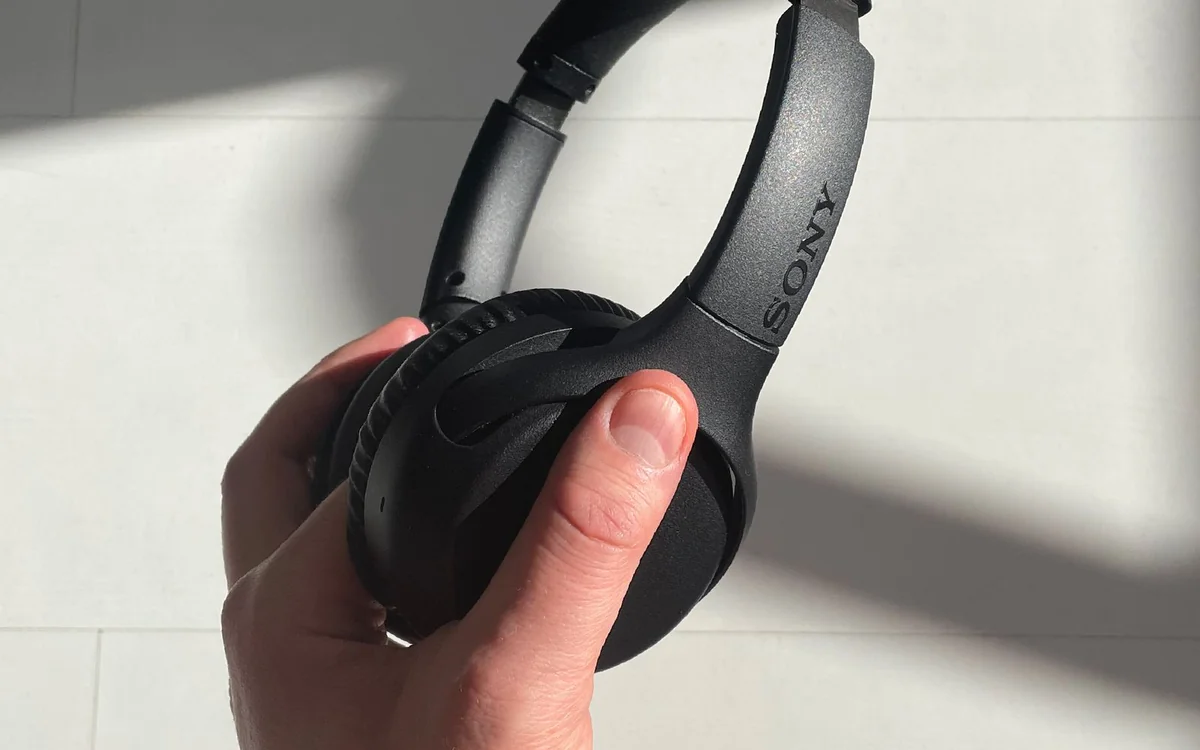
Headphones deserve the first look for long desk sessions; earbuds are easier to carry between locations. For call-heavy jobs, compare a dedicated work headset too.
Start with the workday, not the shape
Picture a hybrid day that begins with a commute, continues at a shared desk and finishes with a video call from the kitchen. Earbuds are easy to slip into a pocket between those stops. Over-ear headphones are more conspicuous and take up more room, but their larger controls and different contact points may suit someone who stays seated for hours. Neither category wins just because it is newer or smaller.
This comparison is based on practical workflow analysis and examples from manufacturer documentation. Byte & Gear has not measured the products side by side. Comfort, microphone clarity and listening preference are personal variables that a category label cannot settle. The useful outcome is a shortlist matched to your day, followed by a realistic trial on your actual phone and computer.
Long sessions favour a fit you can forget
Headphones spread contact around the head and ears; earbuds place more of the fit inside or around the ear opening. Which feels better depends on the person. Glasses can complicate the fit of an over-ear design, while an in-ear seal can become tiresome for someone who dislikes that sensation. Avoid translating a friend's strong preference into a guarantee about your own comfort.
If you work in two-hour blocks, assess the device for more than a short music sample. Notice pressure, heat and whether you keep making adjustments. Leave room in the budget for the appropriate tips or replacement ear cushions, checking actual compatibility. The best work device is the one you can wear without repeatedly interrupting a task to fix its position.
A meeting schedule changes the recommendation
For occasional calls, either format may be adequate after checking compatibility. For a day dominated by customer conversations, call controls and the microphone arrangement deserve greater priority than music presets. A boom microphone or dedicated USB work headset can be worth comparing. This is not a claim that every larger headset sounds better; it is a recommendation to investigate equipment built around the job.
During a real call, confirm the microphone selected by your meeting app and ask a colleague about intelligibility. Also try mute, unmute and leaving the desk. Some problems blamed on a device are actually audio routing or app permissions. Buy from a seller with a workable return process, so a poor match to your employer's software does not become an expensive permanent compromise.
Frequent conversations can make controls decisive
In a team space, someone may need your attention several times an hour. Think about the gesture involved in pausing or changing noise control. A large physical button may be easier for some people than a small touch surface, while others prefer removing one earbud. There is no universal answer; the right arrangement is the one you can use reliably without reaching for a screen.
Bose documents awareness settings on its QuietComfort Ultra Earbuds, and Sony documents multipoint operation on the WH-1000XM5. These are examples of features to check, not a head-to-head performance result. Read the instructions for the exact model. You may value fast interaction with colleagues more than another degree of isolation, especially when a missed conversation is more disruptive than background noise.
Portability includes storage and loss risk
Earbuds are usually easier to fit into a small daily bag, but they introduce multiple small objects to track. The case must be charged and the earpieces returned to it. Headphones are harder to overlook, although their case occupies space that could otherwise hold a charger or lunch. Think about the actual bag you carry rather than an idealised travel setup.
A desk drawer, a coat pocket and a busy cafe create different handling habits. If you repeatedly set things down in unfamiliar places, a tiny case may be less convenient than its dimensions suggest. Conversely, a full-size headset hanging from a bag can be awkward on crowded public transport. Choose a storage routine you will actually follow, then select the hardware that supports it.
Two devices do not always mean automatic switching
Moving between laptop meetings and phone audio can be more irritating than the physical fit. Investigate multipoint, manual reconnection and any ecosystem-specific switching separately. Sony's WH-1000XM5 help guide confirms a supported multipoint setup, but that does not mean every pair of devices or competing audio application behaves identically. The same care applies when looking at earbuds.
If an employer restricts Bluetooth or companion apps, the category comparison may become irrelevant: a wired approved headset could be the easiest option. Ask about the computer's policies and inspect its ports. A useful feature you cannot configure has little practical value. This compatibility step often deserves to happen before comparing sound claims or cosmetic finishes.
Keep listening privacy in the comparison
An open-back wired headphone is a different proposition from a closed travel headphone, even though both cover the ears. Sennheiser describes the HD 560S as an open-back design. That is a reminder to check construction, rather than assuming all headphones suit a shared desk. People around you and the surrounding room are part of the purchase decision.
At home, an open design might be acceptable if you have a private room; at an office desk, a more contained listening arrangement may be more appropriate. Do not use higher playback volume as a substitute for a suitable fit or environment. The goal is comfortable, considerate listening while retaining whatever awareness your situation requires. Classify the setting before judging the equipment.
Choose by the bottleneck in your day
If desk comfort is the main problem, compare full-size headphones with a realistic wearing trial. If packing is the main problem, make earbuds your first shortlist. If call handling causes the interruptions, compare dedicated work headsets alongside both. Keeping separate commuting and meeting devices can be rational when one product cannot comfortably do everything, although it adds charging and storage tasks.
Before spending, write down the one improvement you want and the compromise you can accept. Check current manufacturer information, seller prices and return rules for the exact generation. Our recommendation is to choose by that bottleneck, not to declare a category winner. A compact pair you use consistently is better value than an impressive headset that stays at home because it never fits your working day.
At a glance: choose for your routine
| Your situation | What to prioritise | The tradeoff |
|---|---|---|
| Several hours at one desk | Trial the contact points and fit for a realistic session | Over-ear pressure and an in-ear seal create different comfort compromises. |
| Frequent moves between locations | Easy packing and a storage routine you will follow | Earbuds save bag space but require tracking buds and case. |
| Colleagues interrupt regularly | Simple pause and awareness controls | Maximum isolation may be less useful than quick interaction. |
| Customer calls fill the schedule | Compare call controls and a dedicated work headset | General-purpose listening features may not solve the main work problem. |
Options to consider
Compare the exact model, configuration and local warranty before ordering. Prices and availability can change; the links below open official product or brand information.
Sony WH-1000XM5
A full-size example to investigate for a two-device routine.
Consider the tradeoff: Allow space for storage and assess pressure with glasses during a realistic trial.
Explore at the official siteBose earbuds range
Compare when compact packing and noise-control options are priorities.
Consider the tradeoff: Check the exact generation, fit and device-switching support.
Explore at the official siteYour questions answered
Are headphones automatically better for calls?
No. Microphone design, processing, the environment and app routing all matter. Compare dedicated work headsets if calls dominate your day.
Can one pair cover commuting and work?
Yes, if its fit, controls and connections match both routines. A single device is convenient, but it should not force an uncomfortable compromise.
Sources & methodology
- Sony multipoint connection help guide
- Bose QuietComfort Ultra Earbuds noise-control support
- Sennheiser HD 560S product information
Sources checked 7 October 2026. Recommendations are editorial judgments based on documented features, compatibility and everyday scenarios. Manufacturer performance figures are claims, not our measurements. Read our editorial policy.