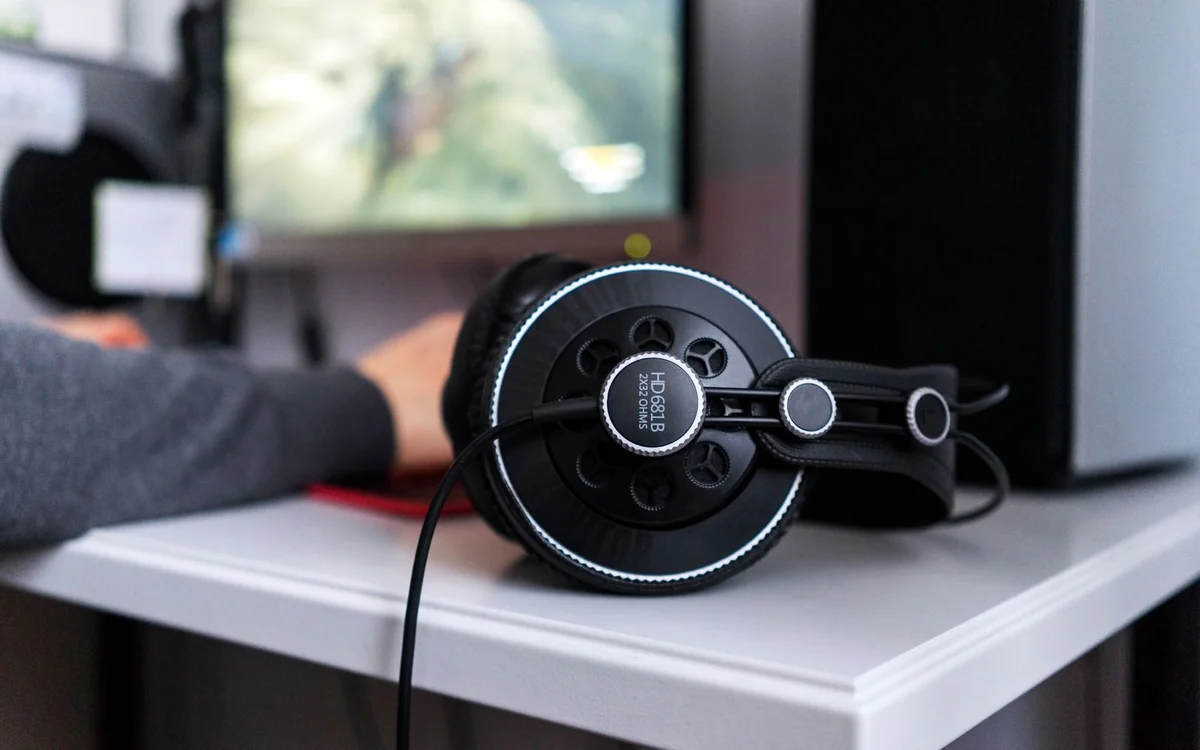
Choose wired for a simple fixed listening setup and wireless for regular movement or device switching. Check microphone and source compatibility independently.
The everyday interruption decides the category
A cable catches on a chair during a call. A wireless headset needs charging just before a journey. A laptop selects the wrong microphone after a connection change. These are ordinary frustrations, and each points to a different buying decision. Comparing wired and wireless headphones is most useful when you identify which interruption you want to remove, rather than assuming one format represents progress and the other represents compromise.
This comparison uses product documentation and editorial workflow analysis, without hands-on sound measurements. We do not claim that a cable automatically improves perceived sound, or that wireless automatically makes work easier. Source devices, headphone design and personal preference remain relevant. Start with the place where you listen and the equipment you already own; the right connection should make that setup easier to live with.
A fixed desk gives wired a clear purpose
If your listening happens beside one computer, a cable can remove the need for pairing and headphone charging. That is a practical advantage rather than a sound-quality verdict. It also places a limit on how far you can move. Check the length, routing and connector before choosing a model, particularly if the computer sits under the desk rather than beside the screen.
Think about what happens when you stand up. A clear cable route may solve the problem; alternatively, regular movement can make wireless worthwhile. If the headphones will be shared between a desktop and a phone without an analogue output, include the appropriate adapter in the buying decision. A straightforward headset can become less straightforward when every source requires a separate accessory.
Wireless suits movement, with management attached
Wireless listening is attractive when you carry a phone around the home, move between meeting spaces or commute daily. You avoid managing a cable while packing and changing seats, but add charging and connection tasks. Those tasks may be trivial in a stable routine or annoying when you use several computers. Assess your own habits instead of dismissing them as minor details.
Sony documents multipoint connection for the WH-1000XM5, which makes it an example worth investigating for a phone-and-laptop arrangement. Other products need their own compatibility check. Pairing with several devices does not necessarily mean simultaneous connection or effortless audio switching. Look for support instructions covering your exact use case, and rehearse it while returns are still possible.
The microphone is a separate purchase decision
A headphone designed for music may not offer the work-call connection you expect. An analogue listening cable does not automatically carry a microphone signal, and a wireless headset's microphone can interact differently with operating-system and app settings. Read the manual rather than relying on a connector photograph. If meetings dominate your workday, a dedicated USB headset deserves a place in the comparison.
Before buying, identify the computer input you will use and any employer restrictions. Then check how mute and volume work in the actual meeting software. A convenient hardware button is only useful if its behaviour matches the application. Do not assume a listening upgrade fixes every call problem; background noise, permissions and incorrect audio routing can remain even after you change headphones.
Gaming and video need an application-specific check
If timing matters, investigate the connection used by the exact headset and source. Ordinary Bluetooth audio, a dedicated wireless receiver and a wired connection are different arrangements. We have not measured latency here, so there is no numeric ranking or universal assertion about which model feels responsive. Consult official support guidance and look for the mode intended for your device.
A console, laptop and phone may support different features on the same product. One successful pairing does not verify microphone support or game chat in another setting. If you play only occasionally, avoid paying for a specialised feature you rarely use. If gaming is central, narrow the shortlist to explicitly compatible equipment before comparing music-oriented extras. The purchase should follow the task's requirements.
Open and closed designs cut across the comparison
Sennheiser identifies the HD 560S as a wired open-back headphone. Sony's WH-1000XM5 is a wireless noise-cancelling example. They demonstrate why connection alone is not a complete category description. A private listening room and a crowded train call for different designs; the cable is only one part of the difference. Check construction and intended use before putting products into a simple two-column contest.
Consider the people around you as well as your own listening. A headphone suitable for solitary desk use may be a poor fit for a shared space. Similarly, a travel-oriented model can include features you do not need in a quiet room. Choose the environment first, then the connection and controls. That order prevents paying for a familiar brand while overlooking a basic mismatch.
Count the accessories and maintenance
Wired ownership can involve adapters, damaged cables and connector compatibility. Wireless ownership can involve battery ageing, charging leads and companion software. Some models offer replaceable parts more readily than others, so check official support rather than assuming an expensive purchase is easier to repair. Total usefulness includes the time and effort needed to keep the device working.
Be cautious with used equipment if battery condition or cable integrity is unclear. Ask what is included and whether you can return it if connections fail. For a new purchase, compare the current total cost of the exact configuration. A headline saving means little if you immediately need an adapter, replacement cushions or a charger that was absent from the listing.
When to buy, and when to keep what you have
Buy wired when most listening happens at a fixed source and a cable route is easy to manage. Buy wireless when movement or repeated device changes are the problem you need to solve. Investigate a dedicated work or gaming headset when those applications matter more than general listening. These are scenario recommendations, not a claim that one connection guarantees better sound or a longer useful life.
If your existing headphones already work comfortably with your equipment, changing categories may simply exchange one inconvenience for another. Make the upgrade case specific and confirm it against official documentation. Check current prices, exact connectors and return policies before checkout. The sensible purchase is the one that removes a real interruption without creating a more expensive daily routine.
At a glance: choose for your routine
| Your situation | What to prioritise | The tradeoff |
|---|---|---|
| Listening beside one computer | A compatible wired connection and clear cable route | Simplicity comes with a limit on movement. |
| Moving around during the day | Wireless controls and charging that fit the routine | Cable freedom adds connection and battery management. |
| Phone and laptop switching | Documented support for the desired switching behaviour | Pairing with multiple devices does not alone establish simultaneous connection. |
| Work calls or gaming lead the brief | Check the microphone and application-specific connection | A music-oriented purchase can leave the most important task unresolved. |
Options to consider
Compare the exact model, configuration and local warranty before ordering. Prices and availability can change; the links below open official product or brand information.
Sennheiser HD 560S
Investigate for a stationary, private wired listening setup.
Consider the tradeoff: Its open-back construction is an important environment check; verify source and adapter requirements.
Explore at the official siteSony WH-1000XM5
Investigate when wireless movement and two-device use matter.
Consider the tradeoff: Check charging, fit and application-specific microphone behaviour.
Explore at the official siteYour questions answered
Does wired always sound better?
No universal conclusion follows from the connection alone. Headphone design, source equipment, fit and listening preference all matter.
Should I pay for wireless if I only listen at a desk?
Only if freedom to move or device switching solves an actual problem. A compatible wired setup may be simpler.
Sources & methodology
- Sennheiser HD 560S product information
- Sony multipoint connection help guide
- Sony WH-1000XM5 published specifications
Sources checked 7 October 2026. Recommendations are editorial judgments based on documented features, compatibility and everyday scenarios. Manufacturer performance figures are claims, not our measurements. Read our editorial policy.